Week 2 / Planning

Why Fats Deserve a Place at Your Table
When it comes to macronutrients, fats tend to get a bad rap—usually in the form of well-meaning diet advice from the 1980s. But fats are not the enemy. They're essential to your health, your hormones, and your happiness (yes, really). Let's break down what they do, how they support health beyond calories, and why they play such a key role in eating patterns like the Mediterranean diet.
The Critical Functions of Dietary Fats
Fats are involved in processes that go far beyond energy storage. They're vital for:
Absorbing fat-soluble vitamins (A, D, E, and K), which support vision, bone health, antioxidant protection, and blood clotting. Without dietary fat, these nutrients pass through the body unused.
Providing essential fatty acids, such as linoleic (omega-6) and alpha-linolenic acid (omega-3), which the body cannot synthesize on its own.
Maintaining cell membrane integrity, allowing cells to function and communicate effectively.
Regulating inflammation and immune response, particularly through the action of long-chain omega-3 fatty acids like EPA and DHA, found in fatty fish.
Numerous peer-reviewed studies underscore these points. For example, research published in Progress in Lipid Research highlights how fatty acids act as signaling molecules involved in immune regulation and inflammation modulation [PMID: 27840211].
Blood Sugar, Satiety, and Insulin: The Less Obvious Connections
While fats don't raise blood glucose levels directly, they influence how other nutrients are metabolized:
Slower Gastric Emptying: Fats slow down the rate at which food leaves the stomach. This delayed gastric emptying blunts the rise in post-meal blood sugar, making it a strategic nutrient to pair with carbohydrates for more stable glycemic control [PMID: 21715513].
Insulin Sensitivity: The type of fat you eat matters. Diets high in saturated fats (e.g., from processed meats and fried foods) are associated with insulin resistance, while diets rich in monounsaturated and polyunsaturated fats—like those found in olive oil, nuts, seeds, and fatty fish—are linked to improved insulin action and lower risk of type 2 diabetes [PMID: 29724478].
Replacing refined carbs and excess saturated fat with healthy fats has been shown to improve lipid profiles and metabolic markers.
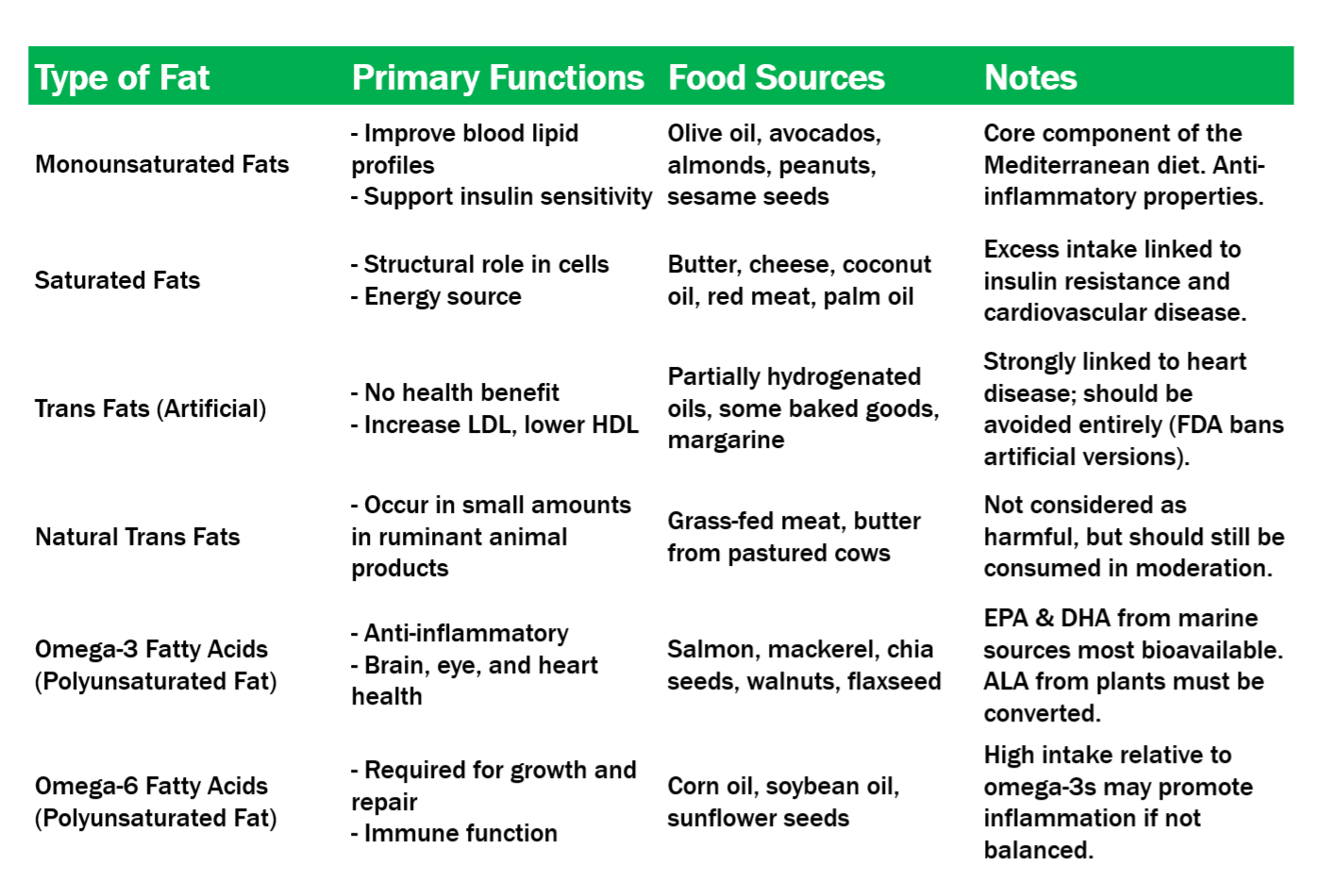
The Mediterranean Diet: A Real-World Example of Fat in Balance
The Mediterranean diet is widely studied and consistently ranks among the healthiest dietary patterns. It's rich in olive oil, nuts, fish, and plant-based fats—and low in added sugars and refined carbohydrates. A landmark randomized trial, the PREDIMED study, showed that individuals following a Mediterranean diet supplemented with extra-virgin olive oil or nuts had significantly reduced risk of major cardiovascular events compared to those on a low-fat control diet [PMID: 23432189].
Moreover, fats in this context don't just protect your heart—they support brain health, aid in the absorption of polyphenols, and contribute to long-term weight stability due to enhanced satiety.
In summary, dietary fats are more than just calorie-dense nutrients—they're metabolic moderators, cellular architects, and key players in disease prevention. The goal isn't to avoid fat, but to choose the right kinds: mostly unsaturated, minimally processed, and paired thoughtfully with other foods to support your long-term health.