Week 2 / Planning

Not all the same
Carbs That Nourish
Unless it’s religion, ethics, or allergies, eliminating entire food groups usually leads to… boredom. And boredom feels like scarcity, which triggers cravings and self-sabotage. We all deserve more options, not fewer.
Some folks thrive on grain-free diets, but for many, weight loss stalls, energy dips, and hunger creeps back. Let’s talk about what might be missing: the powerful benefits of whole grains.
Whole Grains: A Shield for Your Heart and More
Good news: science loves whole grains. A massive 2016 BMJ meta-analysis across multiple cohort studies found that eating ~90 g (3 servings) of whole grains daily led to a 22% drop in CVD risk, as well as decreased all-cause mortality, diabetes, cancer, and respiratory disease cerealsgrains.org.
One serving might be a slice of whole-grain bread, a bowl of oats, or a generous scoop of brown rice—simple and powerful.
Stabilizing Blood Sugar & Preventing Type 2 Diabetes
The Nurses’ Health & Health Professionals Follow-up studies (spanning over 4.6 million person-years) revealed that those eating the most whole grains had a 29% lower risk of developing type 2 diabetes compared to the lowest intake group pmc.ncbi.nlm.nih.gov.
This may be thanks to high fiber and magnesium content, which together enhance insulin sensitivity and glycemic control pmc.ncbi.nlm.nih.gov.
Manage Weight by Burning More Calories
A 2017 RCT in The American Journal of Clinical Nutrition revealed that swapping refined grains for whole grains modestly boosted resting metabolic rate and increased stool energy loss—translating to fewer calories absorbed and likely reflecting a small metabolic advantage pmc.ncbi.nlm.nih.gov+15pubmed.ncbi.nlm.nih.gov+15ajcn.nutrition.org+15.
In real terms? Whole grains may help you burn an extra 40–90 calories each day—not much but we'll take it.
Gut Health: Goodbye Bloat, Hello Balance
A trial featuring high-fiber rye (versus refined wheat) showed changes in gut bacteria—specifically an increase in butyrate-producing Agathobacter—and higher plasma butyrate, correlated with better metabolic markers pubmed.ncbi.nlm.nih.gov+1pmc.ncbi.nlm.nih.gov+1.
This illustrates how whole grains help feed good microbes that produce short-chain fatty acids (SCFAs), like butyrate—molecules known to nourish colon cells and help reduce inflammation pubmed.ncbi.nlm.nih.gov+15pmc.ncbi.nlm.nih.gov+15sciencedirect.com+15.

“Out in the real world, people seem to find that really low-carb diets are very difficult to stick to and that they don’t work well. As far back as 2003, there was a year-long dietary study, published in the New England Journal of Medicine, that put a low-carb diet head-to-head with a low-fat diet. The results showed that, although after three months the low-carb group had lost more weight, after twelve months there was no significant difference. Both diets decreased blood pressure and improved insulin responses to eating sugar, but lots of people didn’t stick to either diet.”
van Tulleken, Chris. Ultra-Processed People: Why We Can't Stop Eating Food That Isn't Food (pp. 115-116). W. W. Norton & Company. Kindle Edition.
Fiber-Rich Fruits & Veggies: Beyond Grains
Whole grains get the spotlight, but don’t miss fruits and veggies. Rich in soluble and insoluble fiber, vitamins, minerals, and phytochemicals, they support:
Heart health
Blood sugar control
Gut microbiome balance
Satiety and reduced cravings
Studies show diets high in fiber-rich plants correlate with better aging, reduced chronic disease, and improved weight outcomes library.fabresearch.org+4thetimes.co.uk+4pmc.ncbi.nlm.nih.gov+4.
our fiber friends
Soluble fiber (from oats, beans, apples): slows digestion, lowers cholesterol, blunts blood sugar spikes.
Insoluble fiber (from whole grains, broccoli, nuts): promotes gut motility and reduces inflammation.
Low-fiber diets equals slower transit, more toxin exposure, less SCFA production, and chronic inflammation—a recipe for health trouble.
References
Aune et al. (2016). BMJ. [PMID 27301975] library.fabresearch.org+4sciencedirect.com+4now.tufts.edu+4pubmed.ncbi.nlm.nih.gov
Wu et al. (2020). BMJ. [PMCID PMC7341349] pmc.ncbi.nlm.nih.gov
Karl et al. (2017). AJCN. [PMID 28179223] pubmed.ncbi.nlm.nih.gov
Juntunen et al. (2019). PMC9032876 pubmed.ncbi.nlm.nih.gov+2pmc.ncbi.nlm.nih.gov+2pmc.ncbi.nlm.nih.gov+2
Canfora et al. (2021). PMC8153313 pmc.ncbi.nlm.nih.gov
Magnesium & fiber meta (JAMA Int Med.) thetimes.co.uk+1nypost.com+1
Tufts/Harvard healthy aging study (2025) thetimes.co.uk
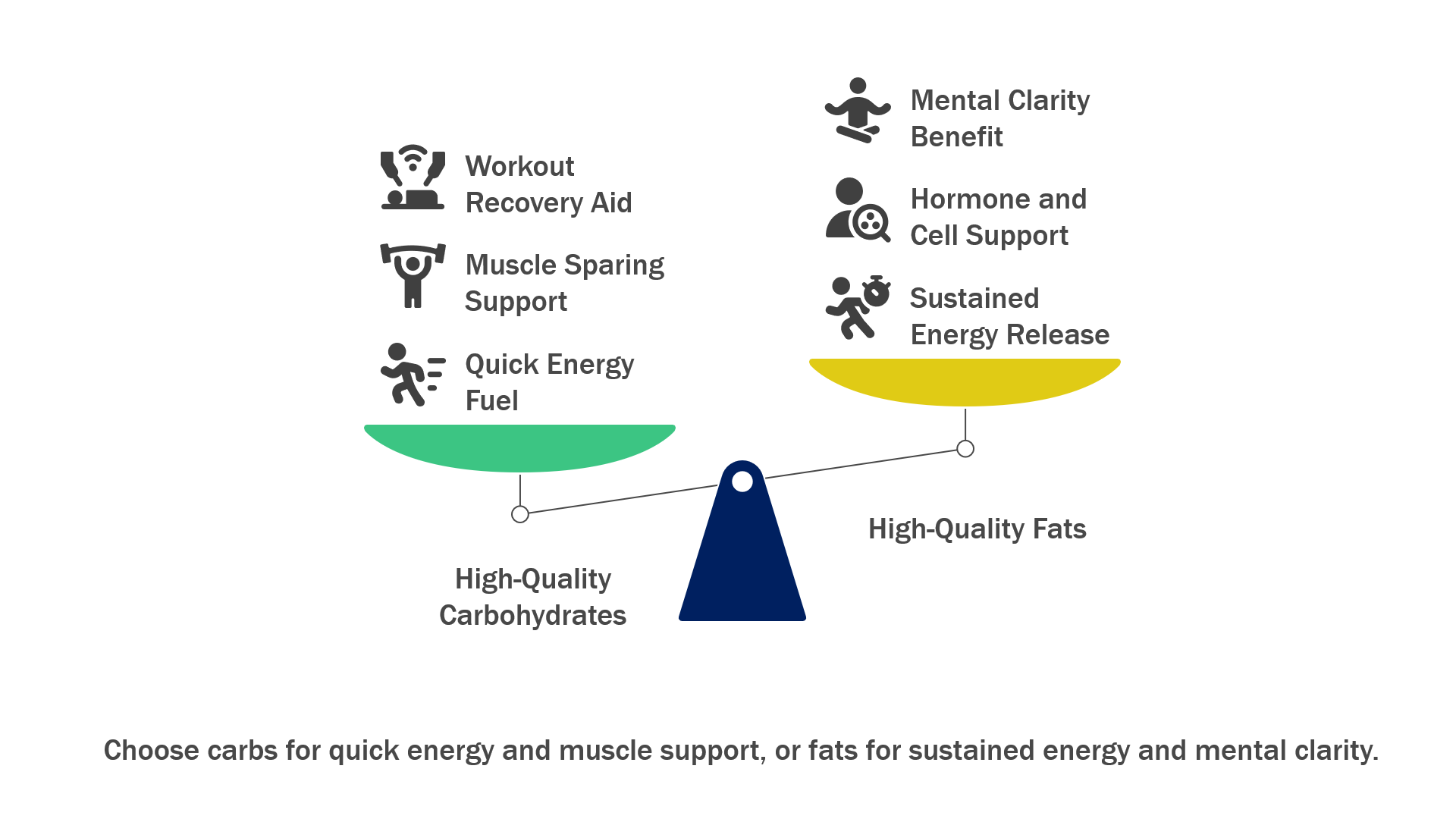
Why Carbohydrates Matter: Your Muscle's Best Friend
Even if carbs sometimes get a bad rap, there's a critical reason they deserve a spot on your plate—especially when you're trying to maintain or build muscle. Without enough carbs, your body may start using protein for energy, which means precious amino acids divert from repairing and building muscle. A 2023 review found that low carbohydrate availability increases protein breakdown and impairs muscle growth—even if you're eating enough protein.
Refill Your Gas Tank—or Risk Muscle Loss
When engaged in resistance training or intense exercise, your muscles use stored carbs called glycogen for fuel. Skimp on carbs, and your body may cannibalize muscle protein to fill the gap, especially during recovery. A study in Athlete Training & Health showed that consuming carbs after resistance exercise replenished glycogen and reduced muscle protein breakdown, which supports both performance and lean mass maintenance.
To get the most from your workouts and preserve muscle, pair carbs and protein pre- and post-exercise. An intervention during bedrest helped maintain lean leg mass and strength far better than amino acids alone. Think of carbs as the spark plug: remove them, and the engine sputters.
Paddon-Jones, Douglas & Sheffield-Moore, Melinda & Urban, Randall & Sanford, Arthur & Aarsland, Asle & Wolfe, Robert & Ferrando, Arny. (2004). Essential Amino Acid and Carbohydrate Supplementation Ameliorates Muscle Protein Loss in Humans during 28 Days Bedrest. The Journal of clinical endocrinology and metabolism. 89. 4351-8. 10.1210/jc.2003-032159.